


One of the most predictable moments in conversations about race comes when conflict enters the picture.
A disagreement at work.
A tense interaction on the street.
A difficult conversation between neighbors.
A misunderstanding between coworkers.
If the people involved come from different racial or cultural backgrounds, someone will almost always say:
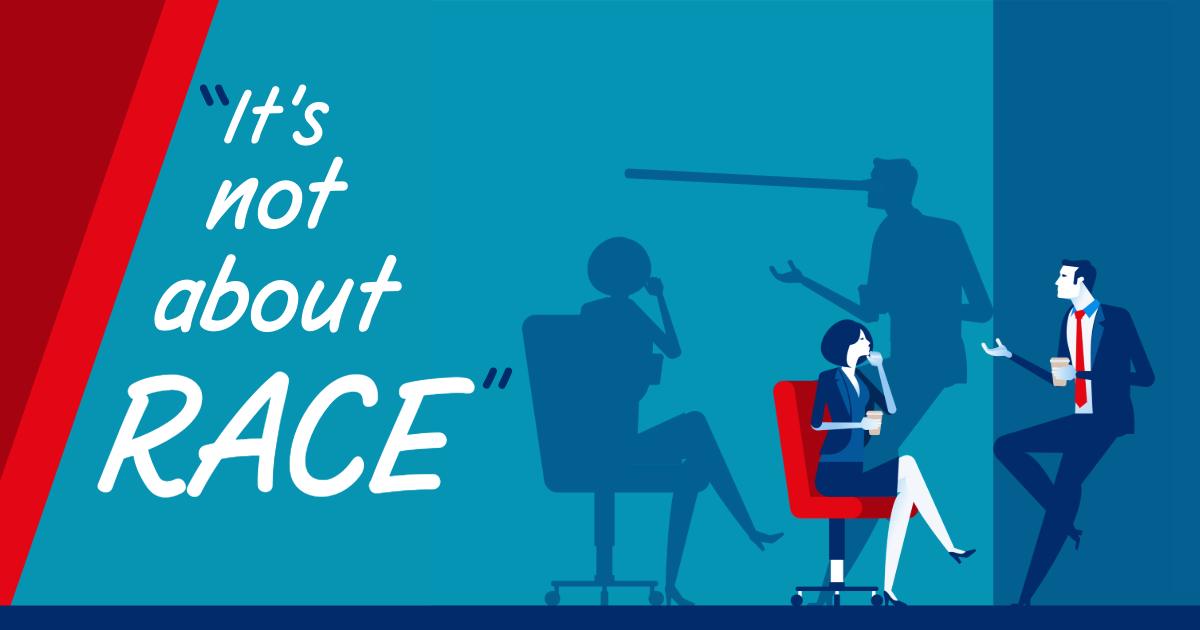
“This isn’t about race.”
Sometimes they’re right. The disagreement may not have started because of race. It may genuinely be about a missed deadline, a poor decision, different expectations, or conflicting personalities.
But that doesn’t mean race isn’t part of the equation. Race doesn’t have to be the cause of a conflict to shape the way people experience it.
We know that our experiences form the assumptions we carry into every interaction. We know that people are often judged differently for the same behavior. We know that some perspectives are treated as more “normal” or “objective” than others. None of this requires conscious intent. It’s simply part of living in the world we’ve inherited.
When racial difference is present, race becomes one of the variables.
Think about gender.
If a conflict arises between a man and a woman in the workplace, it would be naïve to insist that gender has absolutely nothing to do with how each person experiences the situation. The disagreement may not be about gender, but decades of workplace expectations, power, communication patterns, and lived experience inevitably shape how both people interpret what is happening.
Race works much the same way. It isn’t always the headline. But it is almost always in the room.
The challenge is that those of us whose experiences are most consistently reflected back to us by our world often have the hardest time noticing this. When society regularly confirms your perspective, it begins to feel like reality itself rather than one perspective among many.
That’s why “It’s not about race” often feels true to one person and incomplete to another.
One person is describing the subject of the disagreement. The other is describing the environment in which the disagreement is unfolding. Those are not the same thing.
Here’s the twist that has become increasingly important for me. Race is still a variable even when everyone involved shares the same racial identity.
Because race isn’t only something that exists between people. It also shapes the stories we inherit, the expectations we carry, the institutions we trust, and the ways we understand ourselves.
Two white coworkers may both assume that a system should work in a particular way because they’ve been formed by similar cultural expectations. Two Black men may read a moment of respect, dignity, or dismissal through shared experiences that have shaped their lives.Two Latino neighbors may carry common assumptions about family, authority, or belonging. None of this determines how people will respond. But it helps explain why we respond the way they do.
Race is always doing formative work because race is always present. Recognizing that doesn’t mean every disagreement becomes a conversation about race. It simply means we stop pretending race disappears the moment we stop talking about it.
Maturity isn’t insisting race explains everything. Neither is pretending it explains nothing. Maturity is learning to ask, with curiosity rather than defensiveness:
How might race be one of the variables here?