



Shortly after the wigger incident, our lives changed again.
For a brief season, my mom and I had been living what felt like an ideal American suburban life. A house. A yard. A dog. A neighborhood. My mom was engaged to someone who, for the first time, looked like a steady father figure. It didn’t last. When that relationship ended, I took it hard.
When the suburban ideal collapsed, so did I. We moved into an apartment complex in the suburbs, and every day I felt the socioeconomic distance between myself and my peers. I was angry. Isolated. Miserable. I became an angry teenager in a hurry
Well into adulthood I’ve come to understand how complicated my relationship with male figures have always been. My own late father was as present as one could be on Wednesdays and every other weekend. But he was not nurturing. As a result, I spent much of my life chasing an acceptance I never quite received.
One day my mom came home from work and asked, almost casually, if I wanted to move to Olympia, Washington. I asked how far it away it was and a very practical question:
“Do I have to go back to school tomorrow?”
She smiled and said, “Nope.” We negotiated her returning my textbooks to school in exchange for me packing up the apartment. Then she pulled out a photo.
“We’re moving in with this man,” she said. “Is that a problem?” I knew she was referring to the fact that there was a Black man in the picture. He was big. Tall. Solid. He had been in the military and was a coworker of hers.
“Nope.” I shrugged and walked away. What I didn’t realize at the time was that this moment of casual, almost thoughtless acceptance would quietly change the direction of my life.
We moved in together. Turns out my mom was pregnant, and we were moving in because she was having a baby. And this man inherited far more than he signed up for. He inherited my anger, my grief, my unresolved relationship with my dad, and my deep resistance to being loved by yet another adult male. I was not easy on him. I did everything a teenager could do to make the transition painful. But he was patient, and that patience would be tested sooner than expected.
In the early 1990s, gang culture from Los Angeles and other cities had seeped into pop culture. In the suburbs, groups of white kids were playing at it—copycat gang culture without context or consequence. About ten of them jumped me after school one day because I said something disrespectful to one of their girlfriends. I ended up in the hospital.
When I got home that night, we received a call from the guy who was with me. They had come back with baseball bats and were planning to smash up my car that was left behind when I went to the hospital.
The man who would later become my stepdad said we should go get it. As we loaded into the truck, he placed a closet pole in the back. I asked what it was for.
“Just in case,” he said. “Let’s hope we don’t have to use it.” I was terrified, but not of the teenagers. I was afraid of what it might mean for an adult man to confront a group of suburban kids with a weapon. I was afraid of what jail would mean. Afraid of what it would mean for my little brother to grow up without a father.
I remember saying something like, “You’re not going to jail for this.” He repeated calmly, “Let’s hope we don’t have to use it.” We didn’t. We recovered the car. I drove it home with one eye swollen shut from the beating earlier that day.
Something shifted that night. Not instantly. Not magically. But something real happened.
His willingness to show up, to risk himself for me, cracked something open. His faithfulness made room for me to consider trusting a father figure again. That moment didn’t end my rebellion, but it began a slow, quiet process of formation.
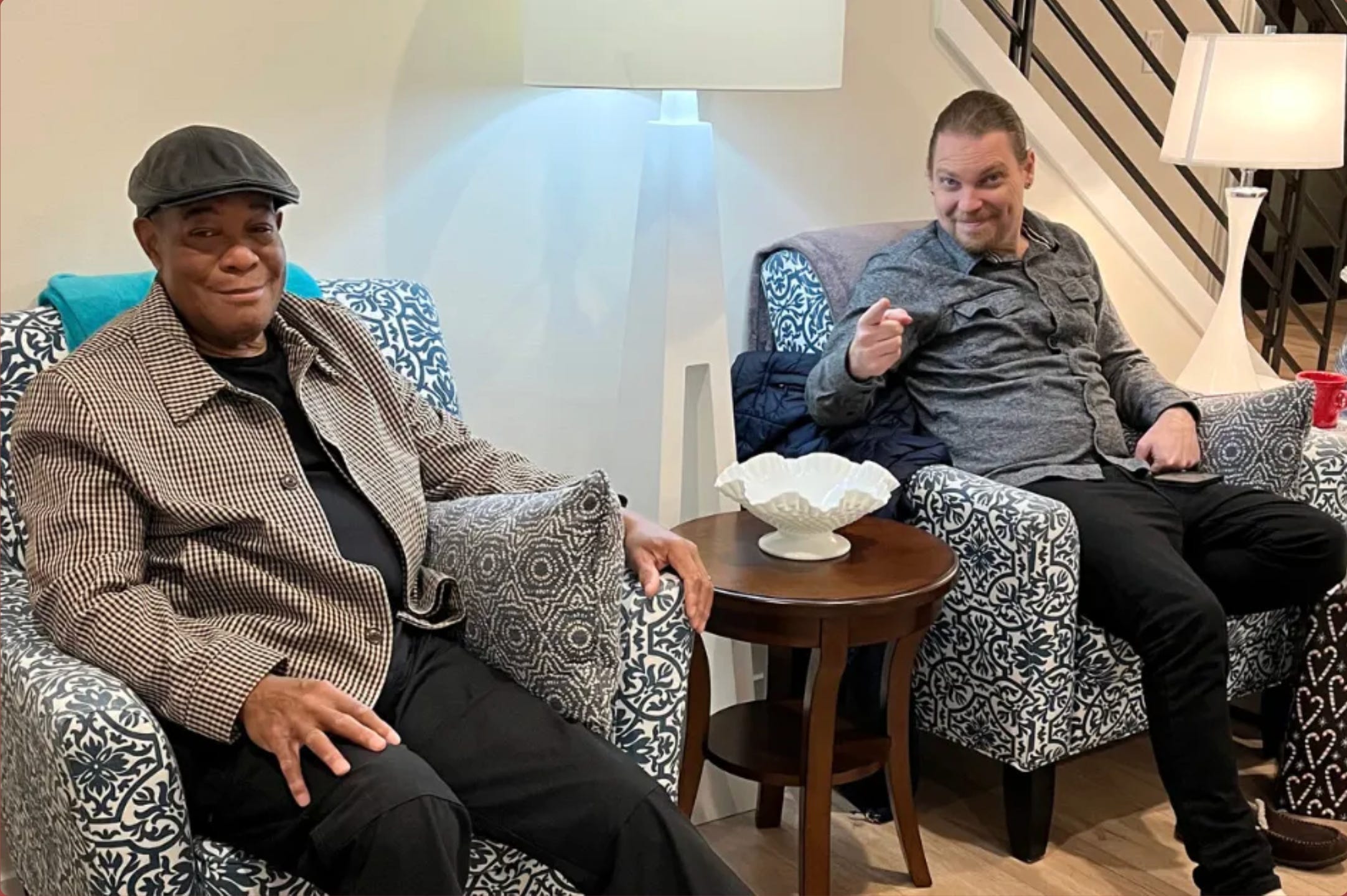
A few years later, while in college, I was the best man in their wedding. Nearly thirty years later, this man is the father I needed and still do. He has loved me deeply. Consistently. Over time. His closeness and warmth reshaped me in ways I’m still discovering. He accepted me when I gave him every reason not to. He stayed. He loved. He chose fidelity over convenience.
My biological father passed away this year. That loss carries its own weight and complexity, and I won’t try to compare griefs or rank loves. What I know is this: the prism through which I understand race, culture, belonging, and difference has been irrevocably shaped by being loved—truly loved—by an older Black man.
When starting Project 2045, I enlisted a group of advisors to help me think this thing through. They encouraged me to include my cultural biography as part of the Project 2045 initiative, and I immediately knew his love would be central to the story.
You see, before him, I had been taught, explicitly and implicitly, to fear difference. To look down on it. To keep it abstract. But something entirely different happens when difference becomes personal. When it becomes familial. When it becomes love that shows up day after day.
Like many parenting figures, there are explicit things you learn from them, and there are often ways you know they left a mark on you, but you cannot put a finger on the exact date, experience, or lesson. We know because we feel it in our interactions, parenting of our kids, or in our thoughts – “that’s like my mom.” That shaping happens both consciously and subconsciously. I know this man had a significant hand in who I became. I am certain that this formative relationship also set me up to be in other relationships with People of Color who continued to shape me into my 20s, 30s, and 40s. In the coming installments, I will detail the incredible relationships that continued to help me see myself in a racial context and challenged me to become a better version of myself.
No amount of progressive talking points, books, or articles could have shaped me more than being a fifteen-year-old giving hell to a man who refused to stop loving me. A man who might have been willing to go to jail for me. A man who stayed long enough for trust to take root.
Whatever thoughts, questions, convictions, or commitments I carry around race and culture today, they will always be filtered through the reality that I was loved into a larger world. Everything I believe about race and culture is downstream from this fact:
I was loved by a Black man.
Who helped you learn who you were in a larger world before you knew how to name it?
What did you receive from someone across culture that you did not earn, seek out, or fully understand at the time?
What happens when disparity can’t be abstract
Like a growing number of white US Americans issues of race and culture that hit national attention get profoundly more personal when someone in your family is within the impacted culture group.
My mom and stepdad gave me a little brother who is multiracial – the fastest growing racial group in the US.
Check back in for the next article (4 of 11), where we explore how paying attention to issues of disparity got real personal, even as a white man.

