



When we first conceived of Project 2045, I thought I knew what it was.
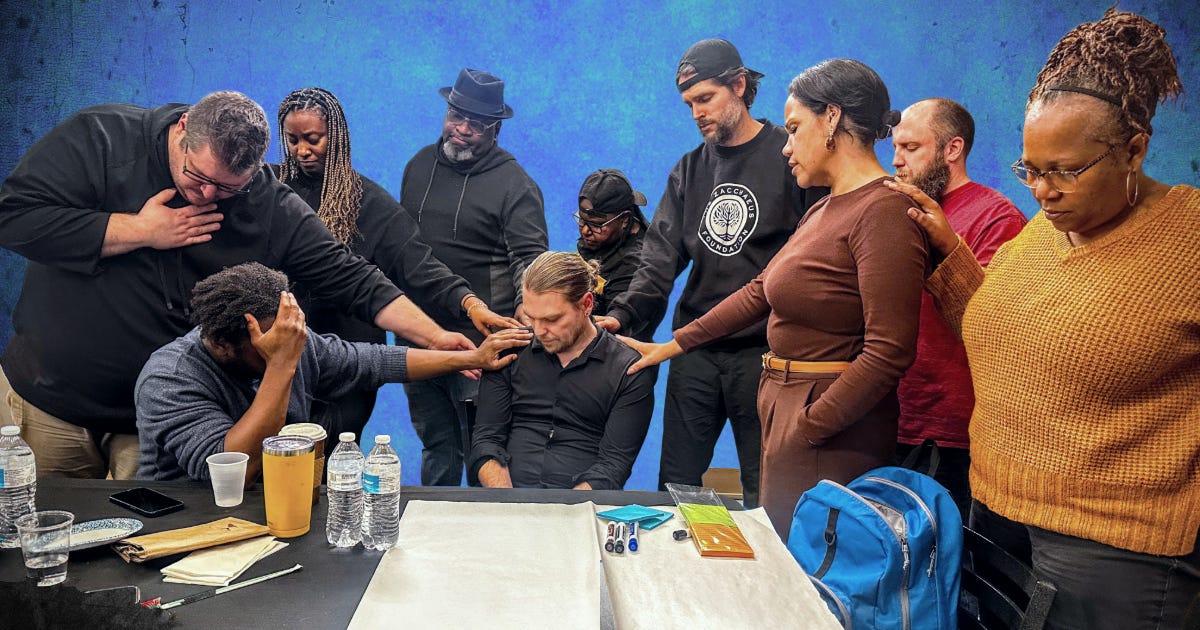
I gathered a group of people in Portland to help advise how I would launch it. Almost everyone in the room was a person of color, along with one white guy from Arkansas. These were not random voices. These were people who had walked with me, challenged me, shaped me. People who loved me enough to tell me the truth. Many of them are described in the autobiography posts on this Substack.
I came in with a plan for the project and a plan for the day.
Version 1.0 of Project 2045 was clear in my mind. A Substack. A podcast. Six conversations that I believed all white people needed to have with each other. I imagined gathering reflections, sharing insights, maybe even building something like an online community over time.
It felt thoughtful. It felt important. It also felt, in hindsight, very controlled. What I did not expect was how quickly that plan would be expanded. Within about fifteen minutes, my plan for the day was gone. When you put brilliant people in a room who care deeply about something, you do not get polite feedback. You get clarity. You get conviction. You get truth that cuts through whatever assumptions you brought in with you.
And what they told me was simple. My plan is not enough.
Before I say more about what they said, I need to name something that has been sitting with me for a long time. I have been in countless rooms where white people say, “We need to listen to voices of people of color.” I have heard it in organizations, in churches, in leadership spaces. There is often real energy around getting those voices to the table.
But a friend pointed something out to me recently that I cannot unsee. Listening is often where it stops. The implied next step is rarely followed through, which is actually doing what those voices say.
If even a fraction of the white individuals and organizations who claim they want to listen actually acted on what they heard, our world would look different.
So I made a decision going into that room. Project 2045 would become what this group said it should be. Not what I preferred. Not what felt easiest. Not what I had already built in my head. What they said.
That commitment mattered, because what they said pushed me in directions I did not want to go at first. The first thing they told me was that I needed to tell my own story. Not just ideas. Not just frameworks. My story. My racial autobiography.
To be honest, I did not want to do that. I especially did not want to do it in front of a camera, which is what they suggested. It felt vulnerable in a way that writing about concepts never does.
But they were right.
What has become the eleven Substack articles of my racial autobiography started in that moment. And even though I resisted it, it has opened something in me and in this project that I could not see at the time.
It turns out that people do not need another white person explaining race. They need to see what it looks like for a white person to do the work honestly, imperfectly, and in public. I am still not excited about the idea of putting that story on camera. But I am convinced that I need to follow through. That conviction comes directly from that room.
The second thing they told me was just as important. Information is not enough.
I could not just tell white people what conversations to have. I could not just offer insights or frameworks and hope something changed. If Project 2045 was going to matter, it needed to be about formation. It needed to help people actually grow.
That means working with others in learning how to be present in hard conversations. Learning how to sit with grief, anger, confusion, and defensiveness without shutting down. Learning how to hold space for others without centering ourselves. Learning how to stay when everything in us wants to leave.
In other words, it needed to be about becoming a different kind of person, not just thinking different kinds of thoughts. As someone with a background as a minister, this hit something deep in me. Formation. Holding space. Walking with people through change. These are not new ideas for me. They are at the core of how I understand my work in the world. And yet somehow, in my original version of Project 2045, I had left that part of myself on the sidelines.
I had made the project smaller than who I had potential to make it. I walked into that room thinking I had a solid plan. I walked out realizing I had been playing it safe.
What I received that day was not just feedback. It was a kind of commissioning.
This group saw something in me that I had not fully embraced. They saw a connection between what the world needs and how I am uniquely wired to respond to it. And they refused to let me settle for something less.
I cried several times that day. And several times after. Not because I felt criticized, but because I felt known.
There is a kind of love that affirms you as you are. And there is a deeper kind of love that calls you into who you could become. That room held both. I was tangibly loved. Deeply believed in. And also held to a higher expectation than I had set for myself.
I will never forget that day
Every time this project feels uncertain, every time it stretches beyond my comfort, every time I wonder if this is too much, I come back to that room. Project 2045 is no longer just an idea I had. It is something shaped by community, sharpened by truth, and grounded in a commitment to actually listen and act.
And because of that, it is bigger than I imagined.