


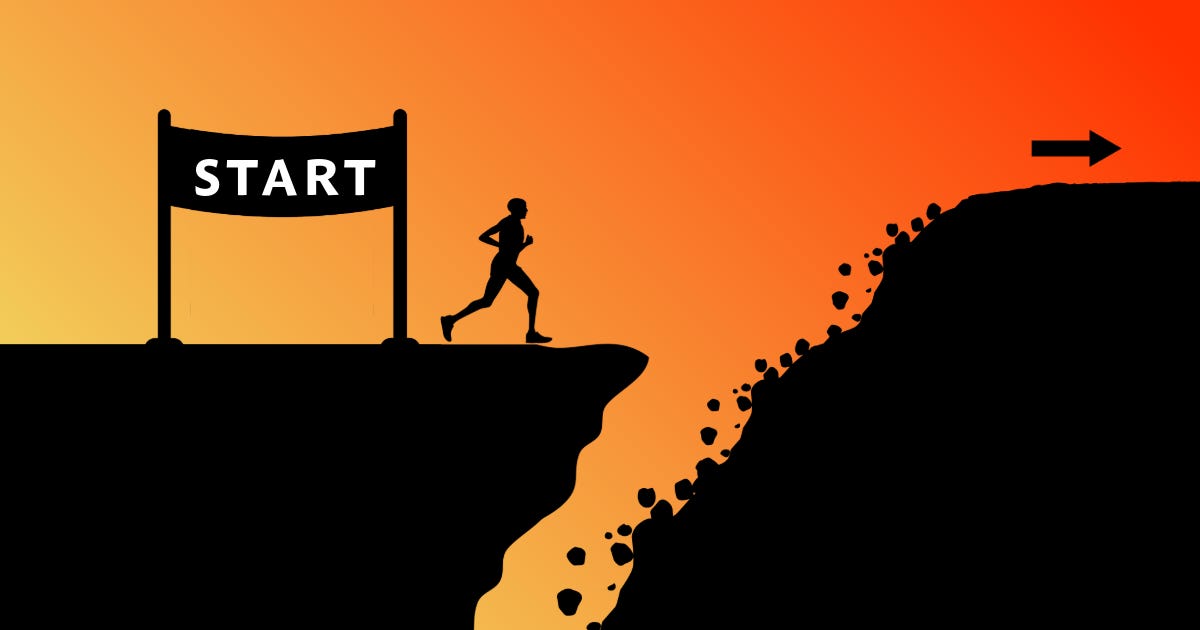
Some people move through the world with fewer obstacles in their path—not because they worked harder or deserved it more, but because of how they are perceived and positioned from the start. They are more likely to be trusted, believed, and given the benefit of the doubt. Their mistakes are treated as detours rather than dead ends.
This isn’t simply about having more resources or better outcomes. It’s about encountering fewer barriers along the way. Fewer suspicions when entering a space. Fewer closed doors disguised as “policy.” Fewer moments where effort is questioned before it is even seen.
And this uneven terrain doesn’t exist in a vacuum. Opportunity is not randomly distributed. When some paths are cleared and smoothed, others are narrowed, blocked, or made steeper. Access for some is often built on restriction for others. Safety for some comes at the cost of scrutiny for others.
Over time, these differences compound. Advantages stack. Setbacks multiply. What looks like individual success or failure is often the predictable result of how the ground itself is shaped.
What we mean by “privilege.”
Privilege refers to unearned advantages or benefits granted to individuals or groups based on characteristics like race, gender, socioeconomic background, or ability—advantages that are not the result of merit or effort.
Privilege is not simply about having more.
It is about having less standing in your way.
And crucially, privilege does not exist in isolation. It is often created and sustained at the expense of others who face barriers, exclusions, or penalties that you do not. We often tell stories about success that center grit, discipline, and perseverance. Those things matter. They are real. But they are not the whole story.
Privilege is not earned in the way a degree or a promotion is earned. It is something you receive without asking for it and often without noticing it—because it feels normal. It shows up in access to good schools, safe neighborhoods, generational wealth, favorable assumptions from institutions, and a criminal justice system that is more forgiving. It shows up in who is presumed competent, innocent, or deserving of the benefit of the doubt.
This is where the conversation often gets uncomfortable.
“But I Grew Up Poor”
One of the most common responses when privilege is named is some version of this:
“I grew up poor. How can I be privileged?”
That question deserves to be taken seriously.
Growing up poor is real hardship. It shapes a life in deep and lasting ways. Acknowledging privilege does not erase that experience or deny the work it took to survive and move forward.
But here is the uncomfortable truth many of us were never taught to see:
If you grew up poor and are now economically stable, that does not disprove the presence of privilege. In many cases, it demonstrates how the broader patterns of opportunity worked in your favor.
Not because you worked harder than others. Not because you deserved it more. But because your identity aligned with conditions that made upward movement more likely and less obstructed.
Privilege does not mean you were handed success. It means your climb was not made steeper by forces tied to who you are.
Why Privilege Is Harder to See Than Inequality
For many white people in particular, it is often easier to recognize that others face barriers than it is to recognize that we benefit from advantages those others do not receive. There is a psychological difference between saying,
“That group has been treated unfairly,”
and saying,
“My path was smoother because someone else’s was made harder.”
You can acknowledge racial disparities in housing, education, or incarceration and still tell a true story about your own struggle. But recognizing privilege asks for something more personal. It asks us to see ourselves not just as individuals but as participants in larger patterns.
Privilege is not the absence of struggle. It is the absence of certain kinds of struggle. One of the most important things to understand about privilege is that it is relational.
Privilege exists because opportunity is not evenly distributed. When some people are consistently given access, protection, and second chances, others are consistently denied them. That does not mean every gain for one person directly harms another. But over time, patterns emerge. Advantages accumulate. Disadvantages compound. The gap widens.
This is why privilege cannot be reduced to individual morality. You can be kind, generous, and well-intentioned and still benefit from arrangements that disadvantage others.
Why Naming It Matters
Understanding privilege this way does not deny effort. It does not erase hardship. And it does not claim that everyone in an advantaged group lives well or easily. What it does is name a reality we cannot address if we refuse to see it.
When we talk about privilege as “unearned” and “at the expense of others,” we are saying two things at once:
Some people benefit in measurable ways simply because of who they are.
Those benefits correspond with real costs, barriers, and exclusions experienced by others.
If we want a society where outcomes are more closely tied to effort, contribution, and care—rather than identity—we have to start by being honest about how opportunity actually works now.
Not to assign blame. But to tell the truth clearly enough that change becomes possible.
An Invitation
If these ideas resonate and you want structured support to understand them, Project 2045 is hosting Skill Building cohorts in 2026 that teach the conversation skills white people need for this moment. It is a space to build capacity, deepen self-awareness, and strengthen the muscles required for a shared multiracial future.
Check out cohort details and apply here.
Conversation and action is how change begins.